Why Does My Water Heater Run Out of Hot Water So Quickly?
Common causes include a small tank, high demand, sediment, a failed heating part, a damaged dip tube, thermostat trouble, a mixing valve fault, plumbing crossover, or a gas burner problem. A sudden change may suggest a fault; a long-standing shortage during busy periods may point to capacity.
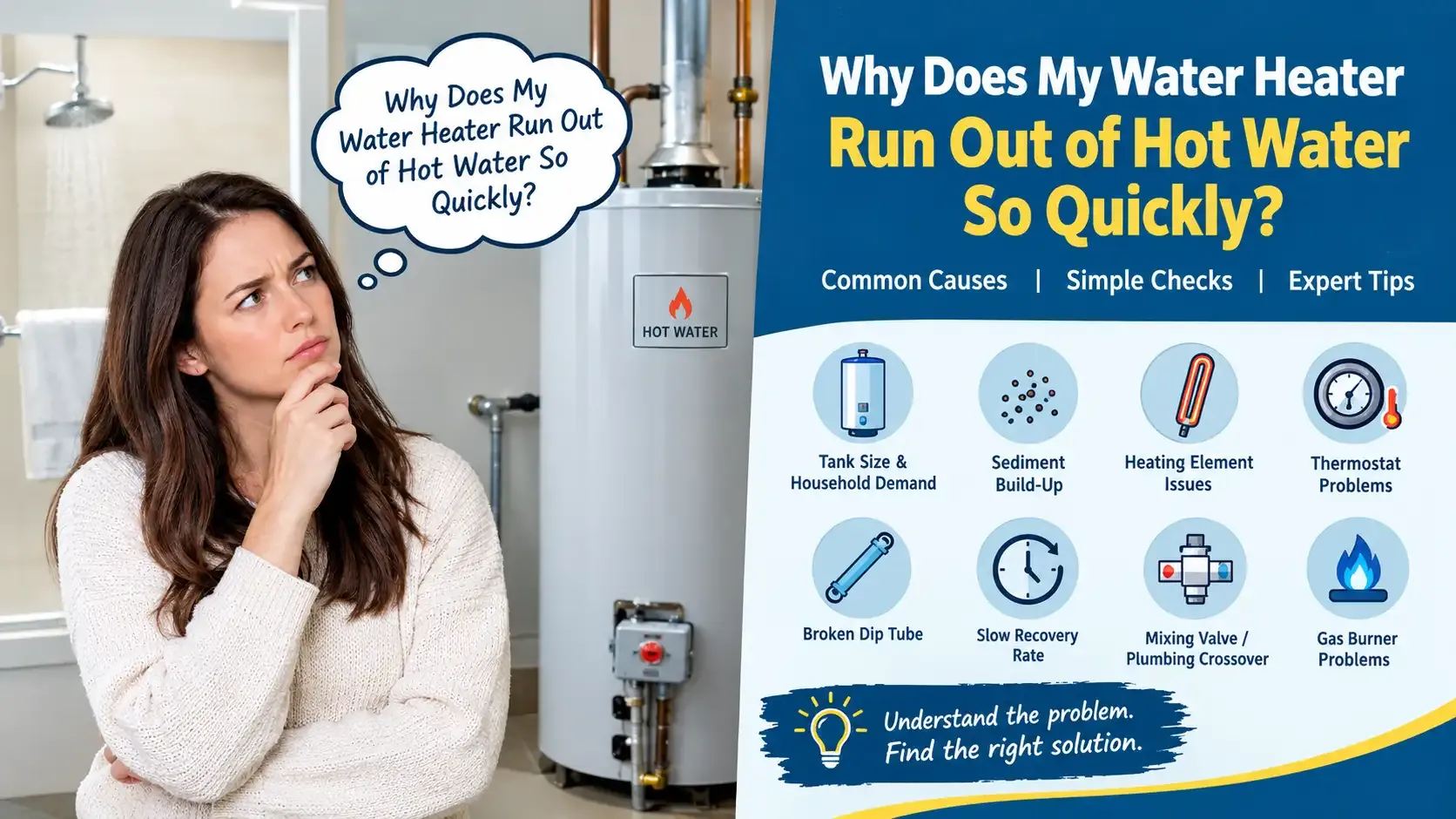
A storage water heater holds a set amount of heated water. When several family members shower one after another, or showers overlap with laundry and dishwashing, the hot water tank can empty faster than it can reheat. Large bathtubs and high-flow showerheads can add to household hot water demand. Check the model label or EnergyGuide sticker for tank capacity and first-hour rating. The first-hour rating estimates how much hot water a storage heater can deliver during a busy hour when it starts fully heated. ENERGY STAR explains that both capacity and first-hour rating matter when comparing models.
Below we break down each cause, how to tell which one you have, what repairs cost in Duluth in 2026, and the point where replacing the unit beats repairing it.
Sediment and Mineral Deposits Have Built Up
Water can carry minerals such as calcium and magnesium. Over time, these may settle inside a storage tank, especially in areas with hard water. Sediment can interfere with heat transfer, contribute to rumbling or popping noises, and make the system less effective. It may be one reason a water heater loses performance, but noise alone does not prove sediment is the cause. Follow the manufacturer's maintenance instructions. Flushing will not fix every shortage, and flushing an old or heavily scaled tank may cause problems. Ask a qualified plumber if the tank is corroded or you are unsure.
The Lower Heating Element Has Failed
An electric water heater often uses an upper and lower heating element. If the lower element fails, the heater may warm some water but provide less hot water than expected. You may notice a short supply or slow recovery, even after the heater has had time to heat the tank. A qualified person should test the element and thermostat. Do not remove access panels or touch wiring. A.O. Smith lists failed heating elements among possible causes.
The Thermostat Is Faulty or Set Too Low
The thermostat helps control the temperature of water in the tank. If it is faulty, it may not signal the heating system correctly. A setting that is too low can also mean less hot water is available after cold water enters the tank. But turning the setting up is not a safe fix for every problem and can raise the risk of scalding. Adjust only user-accessible settings allowed by the manual. If water stays lukewarm or temperatures swing widely, arrange an inspection. Never open electrical covers or bypass safety controls.
Duluth's Water Is Hard on Water Heaters
Duluth pulls its drinking water from Lake Superior, which is naturally soft - but that is not the whole story. Homes on older service lines and neighborhoods built before the 1970s deal with mineral scale from internal pipe corrosion, and the city's water still carries enough dissolved solids to build sediment over time. We see heavier scale in Lincoln Park water heater repair calls than almost anywhere else in the city, largely because of the age of the housing stock.
Our cold winters make it worse. Groundwater entering the system sits near 40°F in January, so your tank works harder to raise it to 120°F. That wider temperature swing accelerates scale formation and shortens element life. If your water heater runs out of hot water fast in Duluth Minnesota every winter, the incoming water temperature is part of the reason.
A water softener cuts scale dramatically. We install and service them alongside water heaters, and homeowners who add one typically get two to three extra years out of a tank.
The Dip Tube Is Damaged
In many storage water heaters, a dip tube directs incoming cold water toward the bottom of the tank so it can be heated. If this tube cracks, breaks, or becomes too short, cold water may mix near the hot water outlet. As a result, the water can turn lukewarm sooner than expected even when the tank contains hot water. Shower symptoms alone cannot confirm a damaged dip tube. A plumber can inspect it, especially if supply suddenly shortened without any change in usage.
The Heater Cannot Recover Quickly Enough
Recovery rate describes how quickly a water heater reheats its supply after hot water is used. Gas and electric storage models have different heating rates, and individual model performance varies. If the family takes several showers close together, the tank may not have enough time to recover between uses. A heating fault can make this delay longer. Note whether hot water returns after waiting or remains weak for hours. If recovery is much slower than before, a technician can check the burner, heating element, thermostat, and controls.
A Mixing Valve or Plumbing Crossover Is Affecting the Temperature
A mixing valve blends hot and cold water to provide a controlled outlet temperature. If it malfunctions, water at the tap may feel lukewarm even if the tank is hot. A plumbing crossover can also allow cold water to enter a hot water line through a faulty fixture or valve. Check whether every faucet or just one shower is affected. One fixture may have a faulty cartridge; a whole-house issue may involve the heater or plumbing. A plumber can test the system rather than replace parts at random.
A Gas Burner or Control Problem Is Limiting Heat
A gas water heater uses a burner and controls. Burner, ignition, gas supply, or control faults can reduce heating. Do not open covers or repair gas parts yourself; call a qualified professional. If you smell gas, leave the building and move to a safe location. Do not use switches, flames, or phones inside the affected area. Contact your gas utility or emergency services from a safe location. A hot water shortage is inconvenient, but a possible gas leak is a safety emergency.
How to Troubleshoot Insufficient Hot Water Safely
Use these checks to collect useful information before calling for help; you do not need to diagnose internal parts.
If your tankless unit is not keeping up, our Tankless Water Heater Services Duluth MN team can descale the exchanger, check gas pressure, and confirm the unit is sized for your winter incoming water temperature - not the summer number on the spec sheet.
If your water heater runs out of hot water too quickly in Duluth MN, the following table breaks down the most common warning signs, what each one usually points to, and the smartest next step to take. From sediment buildup and a failing dip tube to aging tanks past 12 years, our Duluth plumbing pros diagnose the real cause fast, with 2026 repair costs and same-day service across Duluth, Hermantown, Superior, and the Twin Ports.
When to Call a Professional
Call us when the hot water drops below five minutes, when you see rust in the hot water only, or when the tank is over 10 years old and acting up. Those three signals separate a repair from a replacement, and guessing wrong costs you either money or a flooded basement.
We handle water heater service Duluth MN across the city, from downtown high-rises to West Duluth ramblers, and we carry the common parts - elements, thermostats, dip tubes, and relief valves - on the truck. Most hot-water complaints are diagnosed and fixed in a single visit.
If your tank is past saving, we walk you through replacement options, including Natural Gas Water Heater Replacements Duluth MN and high-recovery electric models sized for a Minnesota winter. We quote the job before we start, and the price does not change when we are done.
How Long Should Hot Water Last in a House?
There is no universal number of minutes or showers. Supply depends on tank volume, first-hour rating, shower flow and length, incoming water temperature, and other appliance use. A tankless heater warms water on demand but has a maximum flow capacity.
How to Prevent Hot Water From Running Out Quickly
- Space out heavy use. Avoid running showers, laundry, and the dishwasher at the same time during peak periods.
- Follow the manual. Use the manufacturer's maintenance schedule for your model and local water conditions.
- Watch for changes. Slow recovery, unusual noises, leaks, and temperature swings deserve attention.
- Check fixtures and sizing. High-flow showerheads use hot water faster. Compare tank capacity, first-hour rating, tankless flow rate, energy efficiency, and installation needs when replacing a unit.
- Keep records. Save the model number, purchase date, service notes, and warranty information.
Should You Repair or Replace the Water Heater?
A shortage does not automatically mean the unit needs replacement. A technician may find a repairable element, thermostat, dip tube, mixing valve, or control. The system may also be poorly sized for peak demand. Consider replacement if the tank leaks, corrosion is serious, breakdowns recur, parts are unavailable, or repairs are not economical. Compare expected lifespan, warranty, energy use, installation cost, and peak hot water needs. Before approving work, ask the technician:
When Is a Water Heater Problem an Emergency?
Get prompt help for a tank leak, serious corrosion, electrical damage, burning smell, or extreme temperature changes. A leaking tank may need replacement; a connection leak may have another fix. Never touch wet electrical equipment. If you smell gas, leave and contact the gas utility or emergency services from a safe location. Stop using an unsafe heater. Never bypass a pressure relief valve or other safety feature.
Get Help with Water Heater Repair in Duluth
Cold showers are a solvable problem, and most of the time we solve it in one visit. Call Duluth Water Heater Pros at +1 (218) 318-9455 and we will get your hot water back - usually the same day.