Why Is My Water Heater Taking So Long to Heat Water?
If your water heater is taking so long to heat water, the cause is usually sediment, a failing element, or a thermostat issue. Here's how to diagnose and fix it in Duluth.
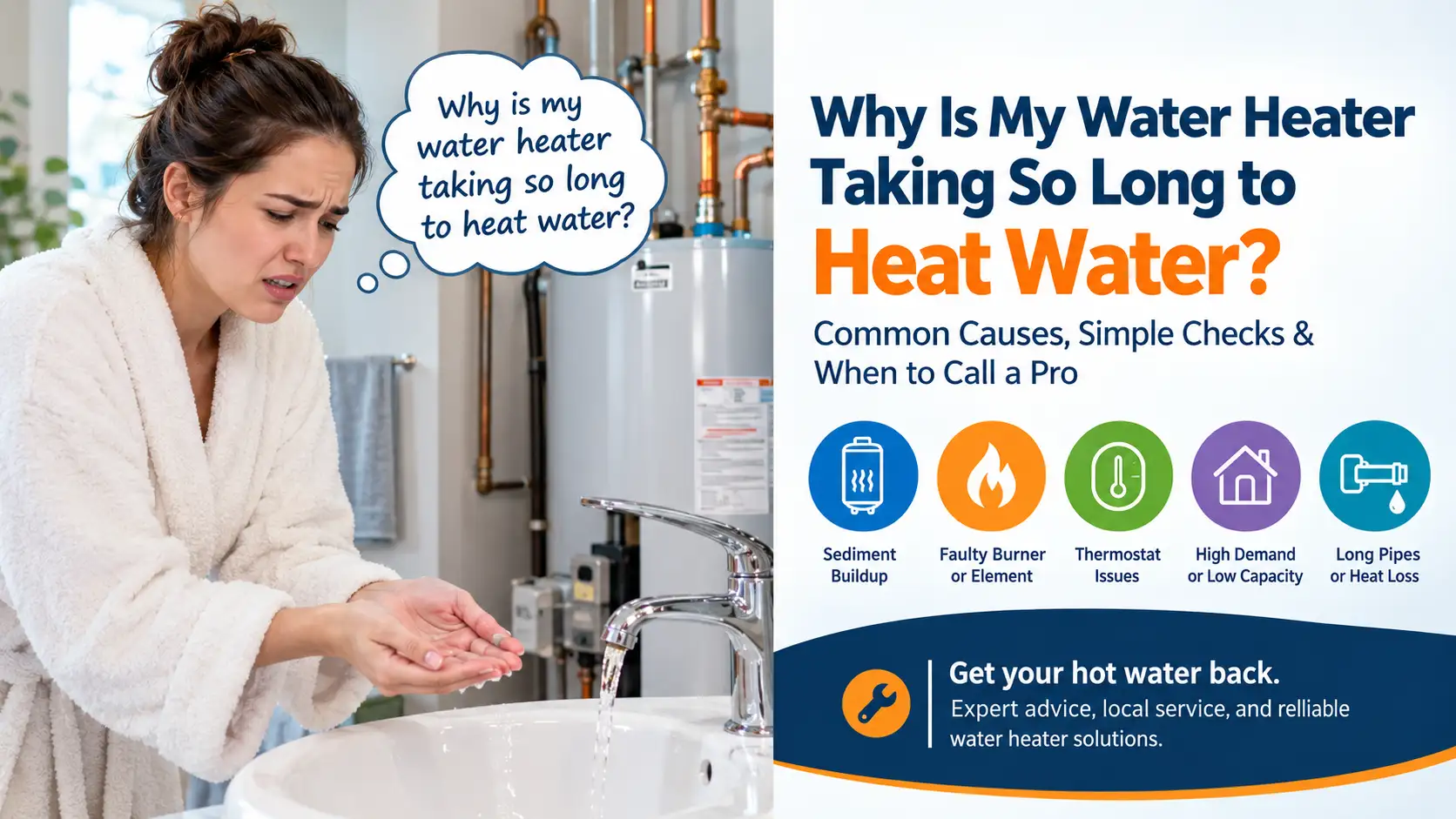
If your water heater is taking so long to heat water, the most likely culprits are sediment buildup, a failed heating element, a faulty thermostat, or a dip tube that has broken. In Duluth, where incoming water can sit at 38-42°F in winter, any of these issues will stretch recovery time from a normal 30-60 minutes to several hours. This article walks you through how to diagnose the problem, what a normal recovery time looks like, and when it is time to call a professional.
We have repaired thousands of water heaters across Duluth and the surrounding neighborhoods, and we know that slow hot water is almost never a mystery once you check a few key components. Let's get your hot water back.
How Long Should a Water Heater Take to Heat Up?
A standard 40-50 gallon tank water heater in Duluth should recover in 30-60 minutes after you draw the tank empty. That number assumes a 240-volt electric element or a 40,000 BTU gas burner working correctly, and it assumes the incoming water is around 40-50°F. If your tank is taking two hours or more to bounce back, something is wrong.
Recovery time depends on three things: the size of the tank, the power of the heating source, and the temperature of the incoming water. A 50-gallon electric tank with a 4,500-watt element will take longer than a 40-gallon gas model with a 40,000 BTU burner. And in Duluth, the incoming water temperature swings from about 38°F in January to 55°F in July, which can add 15-20 minutes to recovery time in winter.
Here is a quick reference for normal recovery times in Duluth:
- 40-gallon gas: 30-40 minutes
- 50-gallon gas: 35-50 minutes
- 40-gallon electric: 45-60 minutes
- 50-gallon electric: 60-80 minutes
- Tankless (whole-house): continuous, no recovery needed
If your water heater is slow to heat up beyond these ranges, the problem is mechanical or maintenance-related. We will cover the most common causes next.
Why Is My Water Heater Taking So Long to Heat Water in Duluth MN?
In Duluth, the top reasons a water heater takes forever to heat are sediment buildup, a burned-out heating element, a broken dip tube, and a thermostat that has drifted out of calibration. Each of these has a distinct set of symptoms, and you can often narrow it down before you call anyone.
Sediment Buildup
Duluth's water supply carries dissolved minerals that settle to the bottom of your tank as sediment. Over time, that layer of sediment insulates the water from the burner or element, so the heat has to travel through rock-like scale before it reaches the water. The result is a water heater that takes forever to heat and a popping or rumbling sound as the water boils underneath the sediment.
If you have not flushed your tank in the last 12 months, sediment is the first thing we check. A professional Water Heater Flush and Cleaning Duluth MN removes the sediment and restores recovery time to normal. In hard-water areas like the Hillside, we recommend a flush every 6-12 months.
Failed Heating Element
Electric water heaters have two heating elements: an upper and a lower. If one burns out, the tank still produces hot water, but it takes twice as long because only one element is doing the work. You might notice that the water is hot at first, then turns lukewarm after you use 10-15 gallons.
A bad heating element is one of the most common causes of a water heater not heating fast enough. We test both elements with a multimeter, and if one reads open, we replace it. This is a straightforward Electric Water Heater Repair Duluth MN that usually takes under two hours.
Broken Dip Tube
The dip tube is a plastic tube that carries cold water from the top of the tank to the bottom, where the burner or lower element sits. If it breaks or falls off, cold water enters at the top and mixes with the hot water, so you get lukewarm water almost immediately. The tank never fully heats because the cold water short-circuits the system.
A broken dip tube is a classic reason a water heater takes forever to heat. You will often see a sudden drop in hot water capacity, and the tank may feel warm on the outside near the top. Replacing a dip tube is a job for a professional because it requires disconnecting the water lines and sometimes the flue.
Thermostat Problems
Both gas and electric water heaters rely on thermostats to tell the burner or element when to turn on. If the thermostat is faulty or out of calibration, the tank may never reach its set temperature. On electric models, the upper thermostat often fails first, which cuts power to the lower element entirely.
We see this frequently in older homes across Water Heater Repair in East Hillside, where original wiring and aging thermostats combine to slow recovery. A quick thermostat replacement usually solves it.
Long plumbing pipes or a damaged internal component
Sometimes the water heater is heating normally, but hot water takes a long time to reach a distant bathroom. Cooled water sitting in the plumbing must leave the pipe before freshly heated water arrives.
Cold incoming water during winter
In Duluth, winter temperatures can make water entering the home colder than it is during warmer months. The heater must raise that water to the required temperature, so heating can take longer.
Does Cold Duluth Weather Affect Water Heater Performance?
Yes, cold Duluth weather directly slows water heater recovery because the incoming groundwater is much colder in winter. In January, water entering your home from Lake Superior or the city main can be as cold as 38°F, compared to 55°F in summer. That 17-degree difference means your water heater has to work significantly harder to raise the water to 120°F.
During a typical Duluth cold snap, we see a spike in calls about water heaters taking too long to heat. The tank is not broken; it is just fighting physics. However, if your recovery time is more than 50% longer than the ranges above, there is likely a mechanical issue on top of the cold weather.
Homes in Water Heater Repair in Downtown Duluth and along the lake often have older tanks that are already near the end of their life. When the cold hits, those tanks struggle. If your water heater is 10-12 years old and slow in winter, it may be time for a Water Heater Replacement Duluth MN.
Common Mistakes That Slow Down Your Water Heater
Even a well-maintained water heater can underperform if you make these common mistakes. We see them in Duluth homes every week.
- Setting the thermostat too high. Cranking it to 140°F does not make water heat faster; it just increases the risk of scalding and speeds up sediment buildup. Keep it at 120°F.
- Ignoring the anode rod. The anode rod sacrifices itself to protect the tank from rust. Once it is consumed, the tank corrodes from the inside, and heating efficiency drops.
- Skipping annual flushes. In Duluth's water, sediment accumulates fast. A tank that never gets flushed can lose 20-30% of its heating efficiency in three years.
- Running out of hot water before the tank recovers. If you take back-to-back showers, the tank never gets a chance to catch up. Stagger heavy hot-water use by 30 minutes.
- Using the wrong size tank. A 40-gallon tank in a household of five will always feel slow. We can help you size a new tank correctly.
If you are guilty of any of these, start with a Water Heater Maintenance Duluth MN visit. We flush the tank, inspect the anode rod, and test the elements and thermostats. That alone restores recovery time in most cases.
Research Findings for Duluth Homeowners
The research for this article compared published manufacturer guidance with US government information on water-heater performance and hot-water delivery. The following findings are evidence-based starting points, not results from a controlled study of local homes.
US Environmental Protection Agency resource
Pipe insulation and suitable recirculation systems can reduce hot-water waiting and heat loss in plumbing.
Whirlpool
Electrical supply, heating elements, thermostat settings, and system sizing can affect hot-water performance.
US Department of Energy
First-hour rating measures the hot-water volume a storage heater can supply during a one-hour period under its rating conditions.
A. O. Smith
Heating time varies with heater type, tank size, incoming water temperature, and maintenance. Readers need to compare their heater with its normal expected performance.
When to Call a Professional
Call a professional when your water heater takes more than 90 minutes to recover, when you see rust-colored water, or when you hear popping or banging from the tank. Those are signs of sediment, a failing element, or a corroded tank that needs immediate attention.
If you are comfortable testing a heating element with a multimeter, you can diagnose an electric water heater yourself. But gas water heaters involve a gas line and a flue, and we do not recommend DIY work on those. A mistake can lead to a carbon monoxide leak or a fire.
Our team at Duluth Water Heater Pros handles everything from thermostat replacements to full tank swaps. We carry common parts on our trucks, so most repairs are done in a single visit. If you are in Water Heater Repair in West Duluth or anywhere in the Duluth area, we can usually be there the same day.
Frequently Asked Questions
Why is my water heater taking so long to heat water in Duluth MN?
The most common cause is sediment buildup, which insulates the water from the heat source. Duluth's hard water accelerates this. Other causes include a failed heating element, a broken dip tube, or a faulty thermostat. A professional flush and inspection will pinpoint the issue.
How long should a water heater take to heat up?
A 40-50 gallon tank should recover in 30-60 minutes after being drained. In Duluth, winter incoming water at 38-42°F can add 15-20 minutes. If your tank takes over 90 minutes, there is a mechanical problem.
Can a bad heating element cause slow hot water?
Yes. Electric water heaters have two elements. If one burns out, the tank still produces hot water but takes twice as long to recover. You will notice hot water runs out faster after 10-15 gallons. Replacing the element restores normal recovery time.
Does cold Duluth weather affect water heater performance?
Yes. In winter, incoming water can be 38°F, compared to 55°F in summer. That 17-degree difference means your water heater works harder and takes longer to heat. If recovery time is more than 50% longer than normal, you likely have a mechanical issue too.
Get Help with Water Heater Repair in Duluth
If your water heater is taking too long to heat, do not wait for a cold shower. Call Duluth Water Heater Pros at +1 (218) 318-9455 for same-day service. We diagnose the problem, explain your options, and fix it right the first time.
Final Thoughts
When a water heater takes too long to heat water, start by identifying whether the problem involves slow recovery or delayed delivery through the pipes. Then consider the heater type, household usage, incoming water temperature, and any recent changes in performance.